
Pair with ChatGPT
ChatGPT, working in the notes you actually own.
Bring ChatGPT and the Codex CLI to the plain-markdown files in your Hillnote workspace, let them read across your notes, draft new documents, and act through real tools over MCP. No exports, no API keys.

Hillnote works best with Codex
OpenAI's most capable agent — hand it a task and it works across your notes.
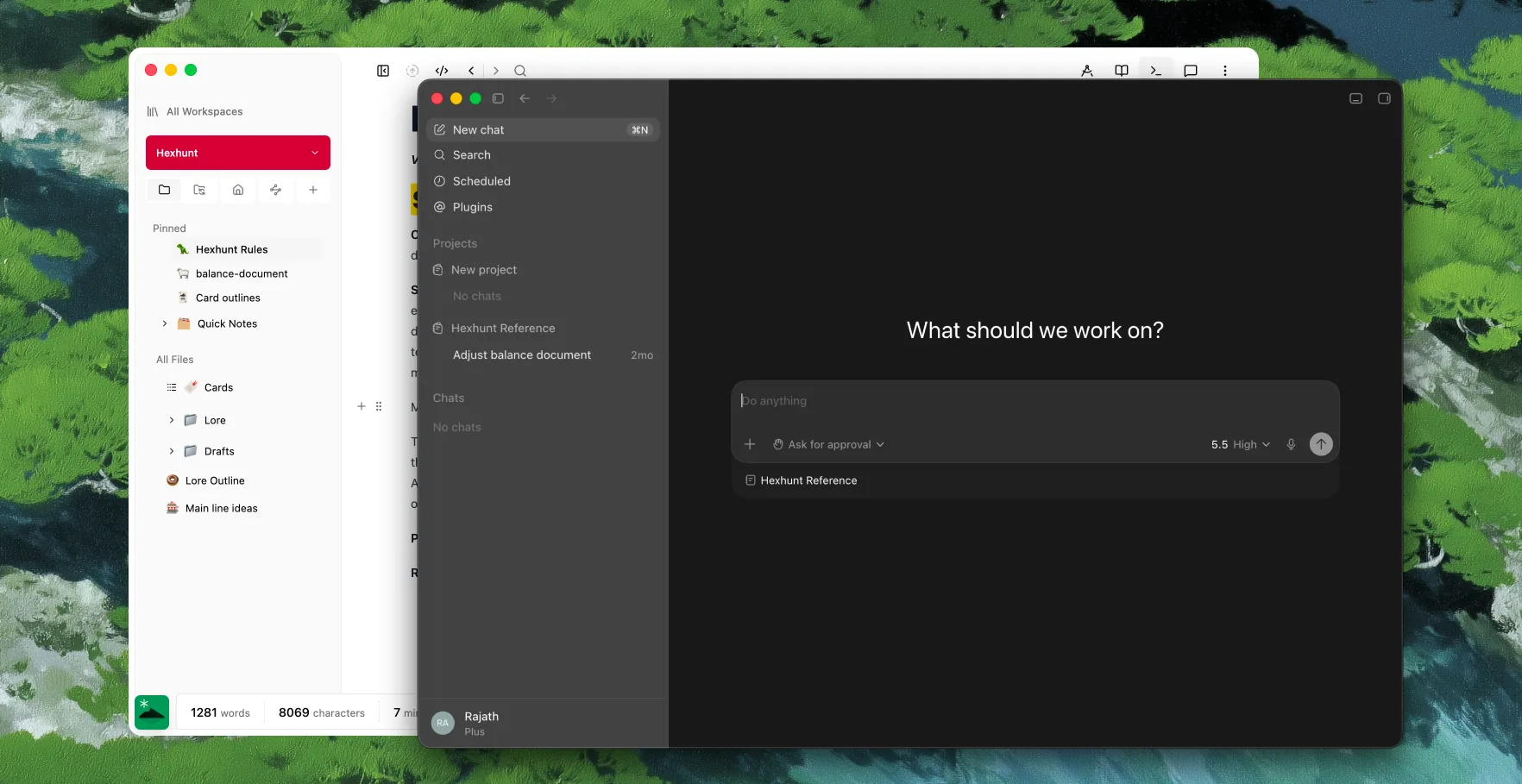
How ChatGPT and Hillnote fit together.
You already think with ChatGPT. Hillnote gives it a home to think in — a workspace of plain-markdown notes ChatGPT and Codex can read, write, and reorganize, while everything stays a file you own.

It's all just files
Your workspace is plain markdown in a folder you own — nothing proprietary to import or sync around.
MCP gives it real tools
Through the Model Context Protocol, ChatGPT and Codex get about 34 tools to read, search, write, and reorganize — not just pasted text.

It stays yours
Connect over an OAuth sign-in or run Codex locally, and revoke any time. The files never stop being yours, on your own disk.
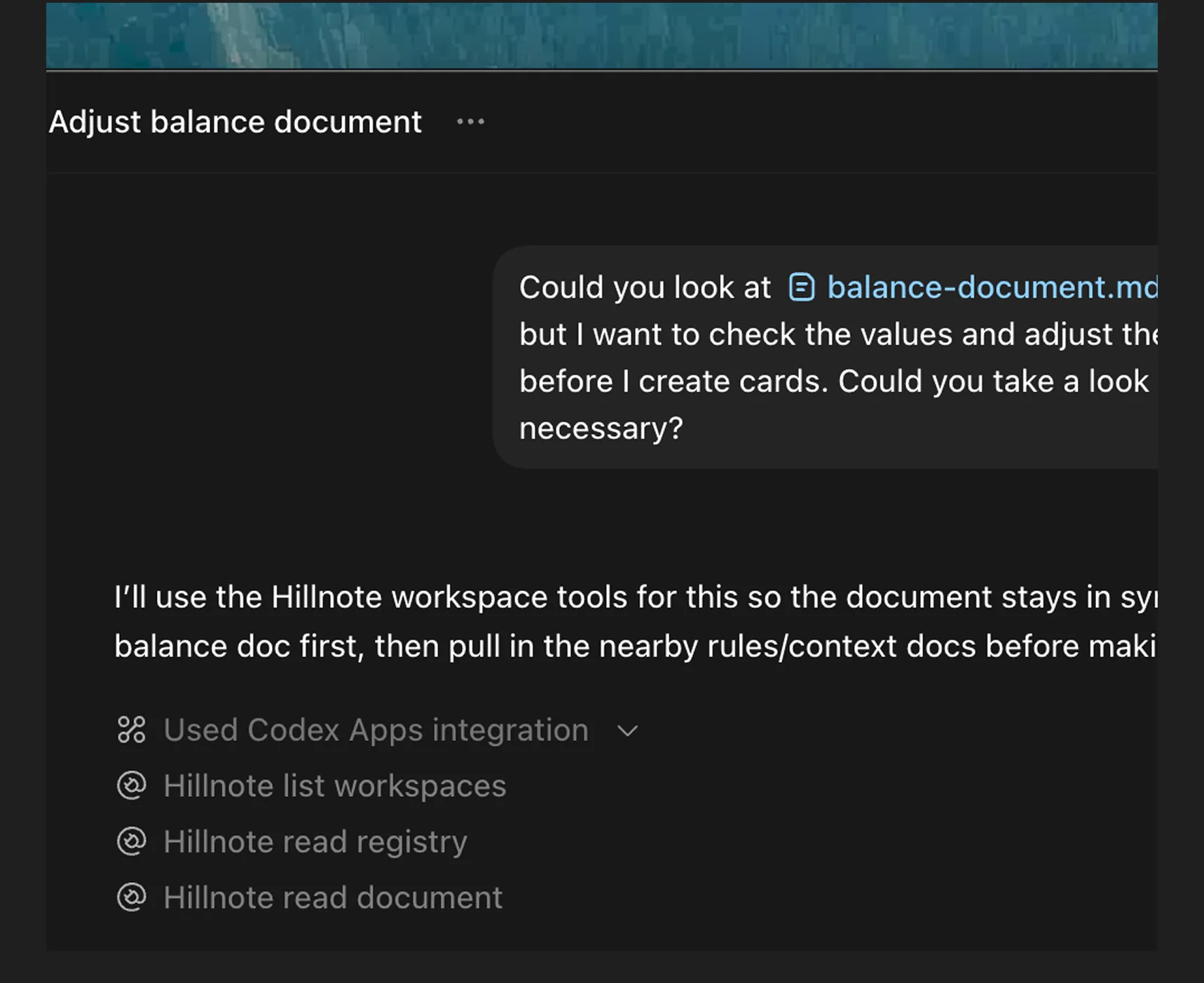
Ask across everything you've written.
Connect the workspace and ChatGPT can search, read, and cite your whole knowledge base — answering from your own notes instead of guessing.
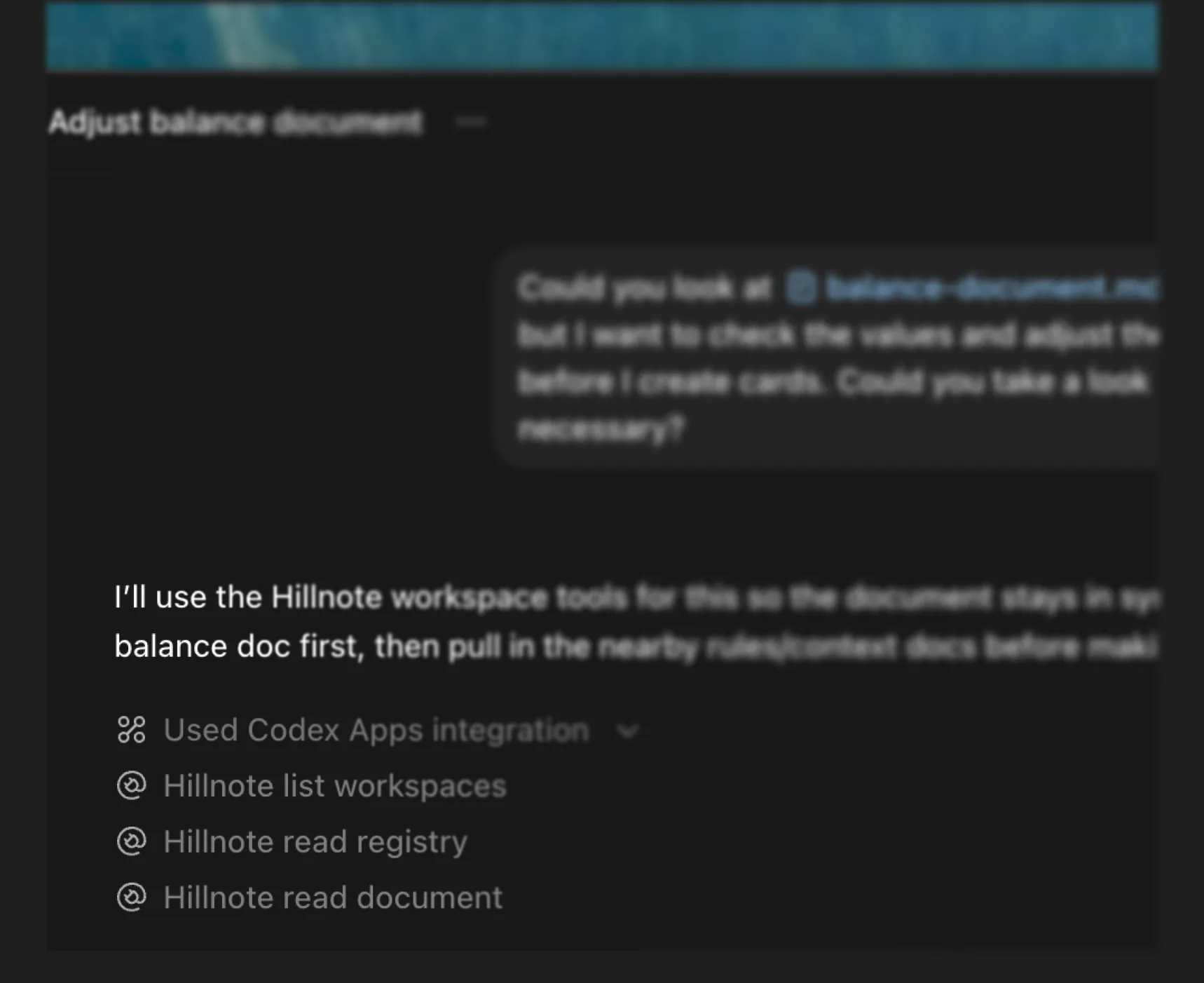
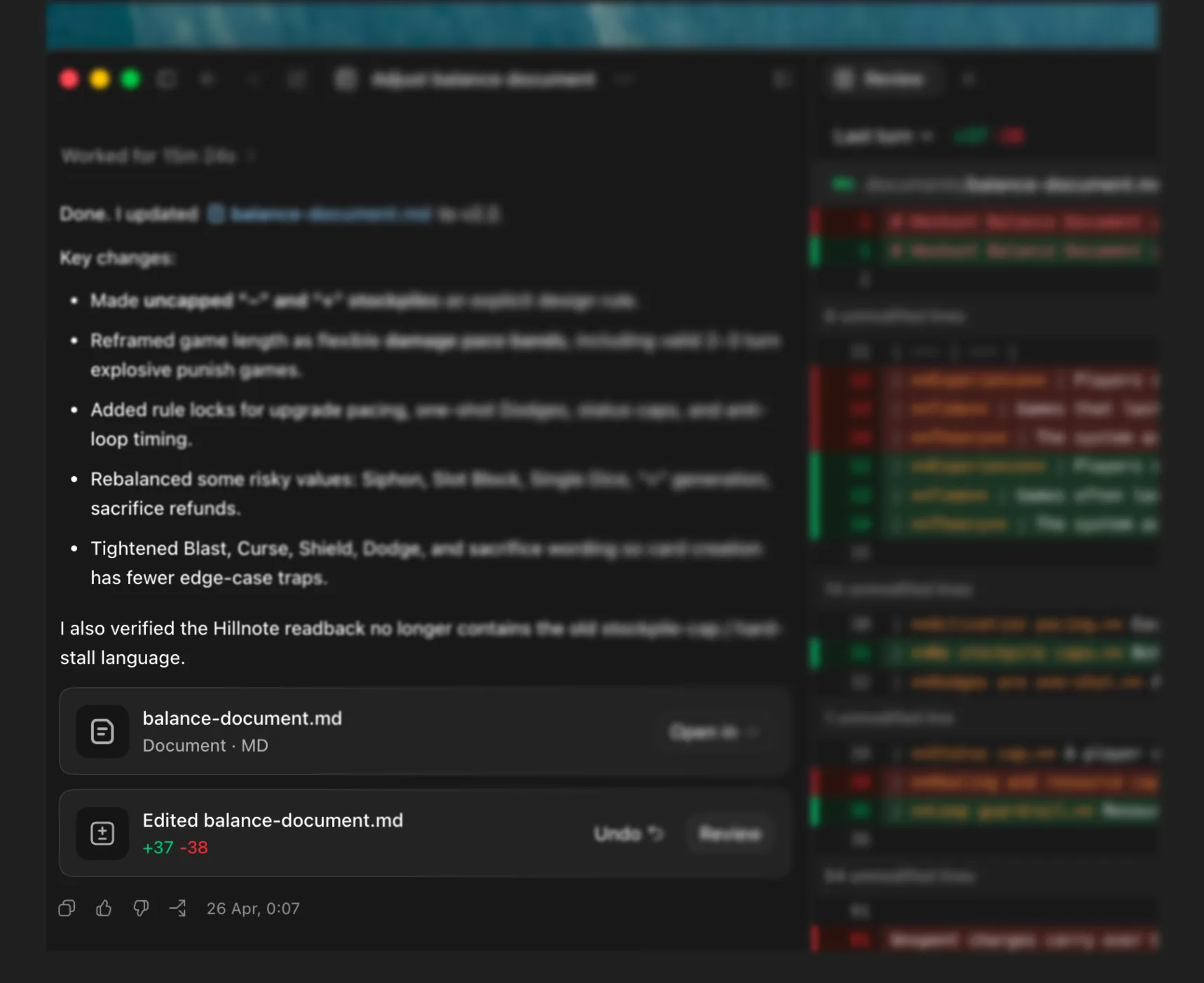
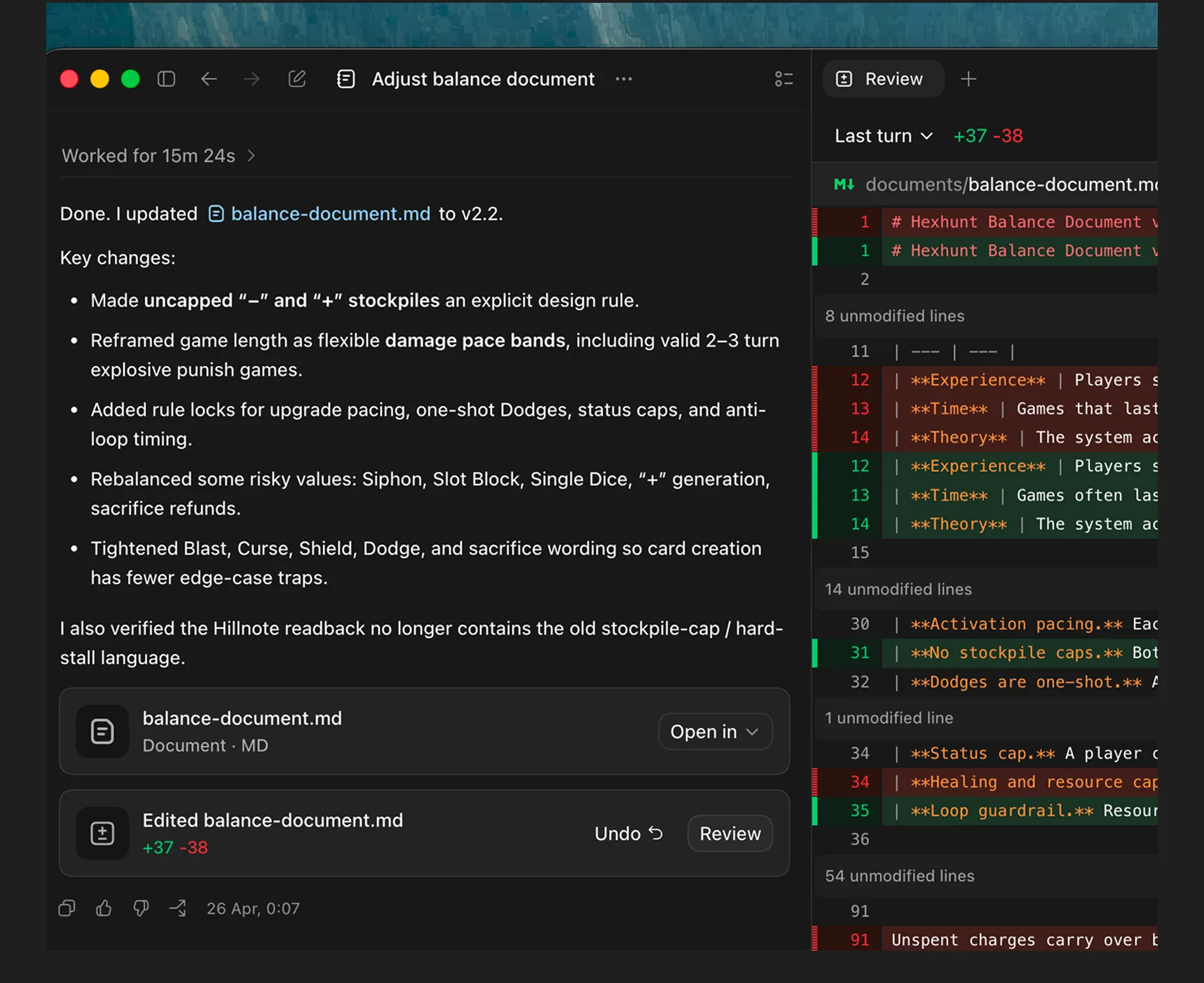
Let it edit the real files.
Your workspace is markdown in a folder, so Codex creates documents, rewrites sections, and reorganizes structure directly — no copy-paste, no export to reconcile.
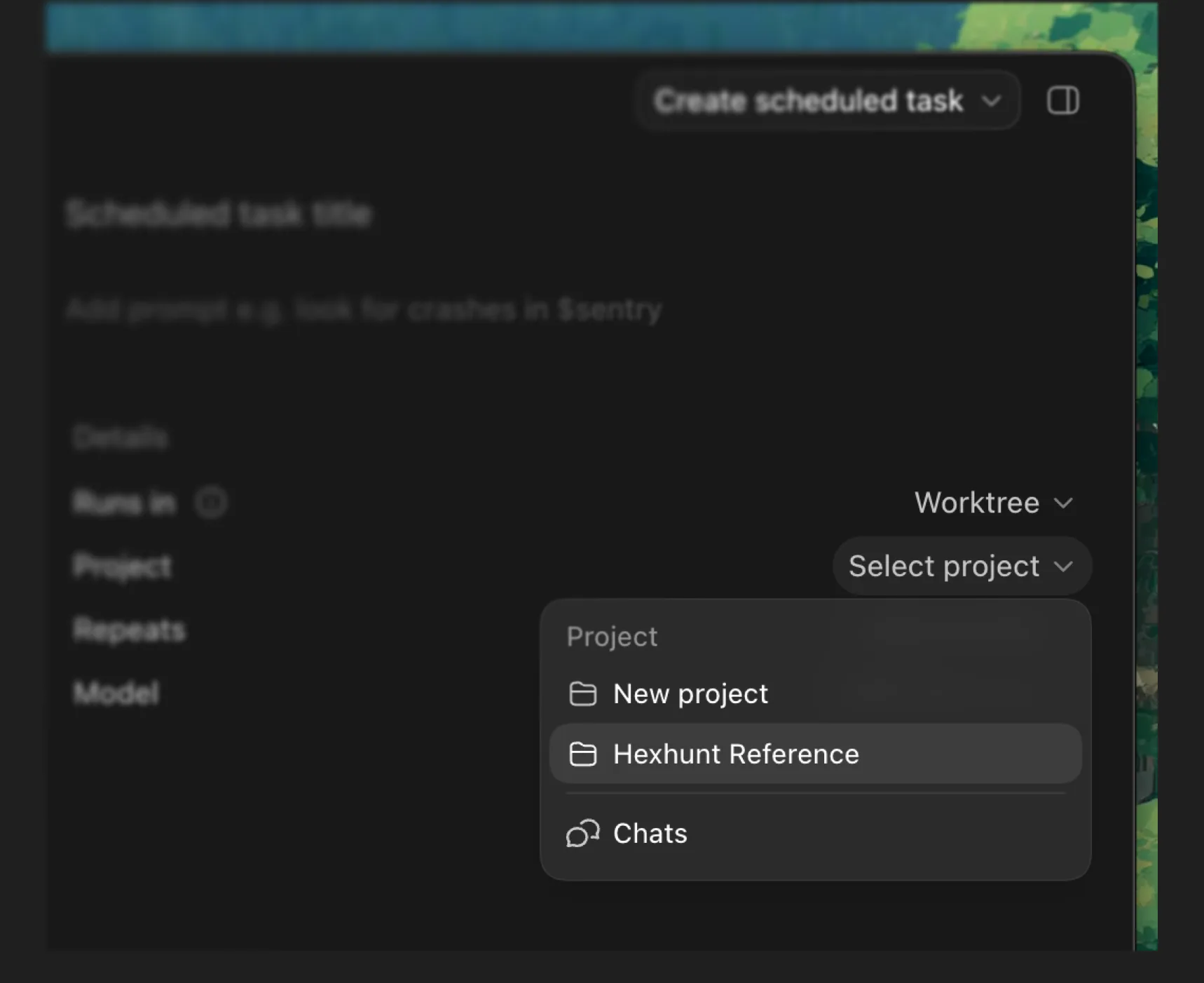
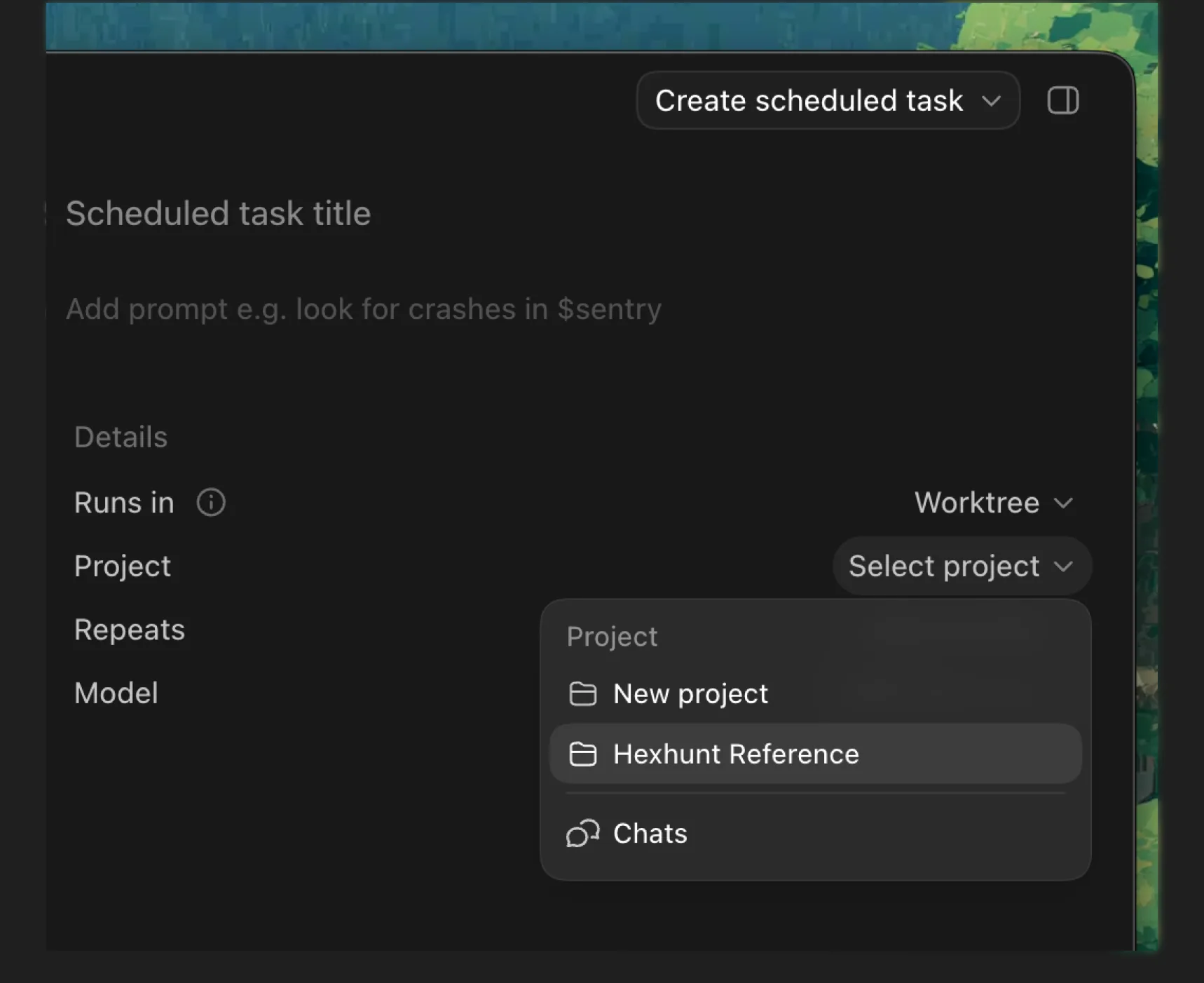
Put it to work on a schedule.
Save a prompt as a routine and let a workspace event — a new document, a status change — set Codex going on its own, writing the result straight back to your notes.
Five ways to connect ChatGPT.
Pick the path that fits how you work. The remote connector reaches your synced workspaces from anywhere — web or desktop; the Codex CLI, local server, and raw files all work on the files on this machine.

Connect over
Model Context Protocol
~34 toolsThe richest connection — real tools, not just pasted text.
Nothing to install — Hillnote hosts the endpoint. You authorize with an OAuth sign-in.
Add Hillnote as a custom connector in ChatGPT on the web or desktop. ChatGPT signs in to Hillnote with OAuth — no API keys to paste.
- 1
In ChatGPT, open Settings → Connectors → “Add custom connector.”
- 2
Paste the Hillnote endpoint shown below.
- 3
Connect and sign in to Hillnote — OAuth authorizes access, no keys.
- 4
Ask ChatGPT to list your workspaces to confirm the connection.
Endpoint
https://hillnote.com/mcp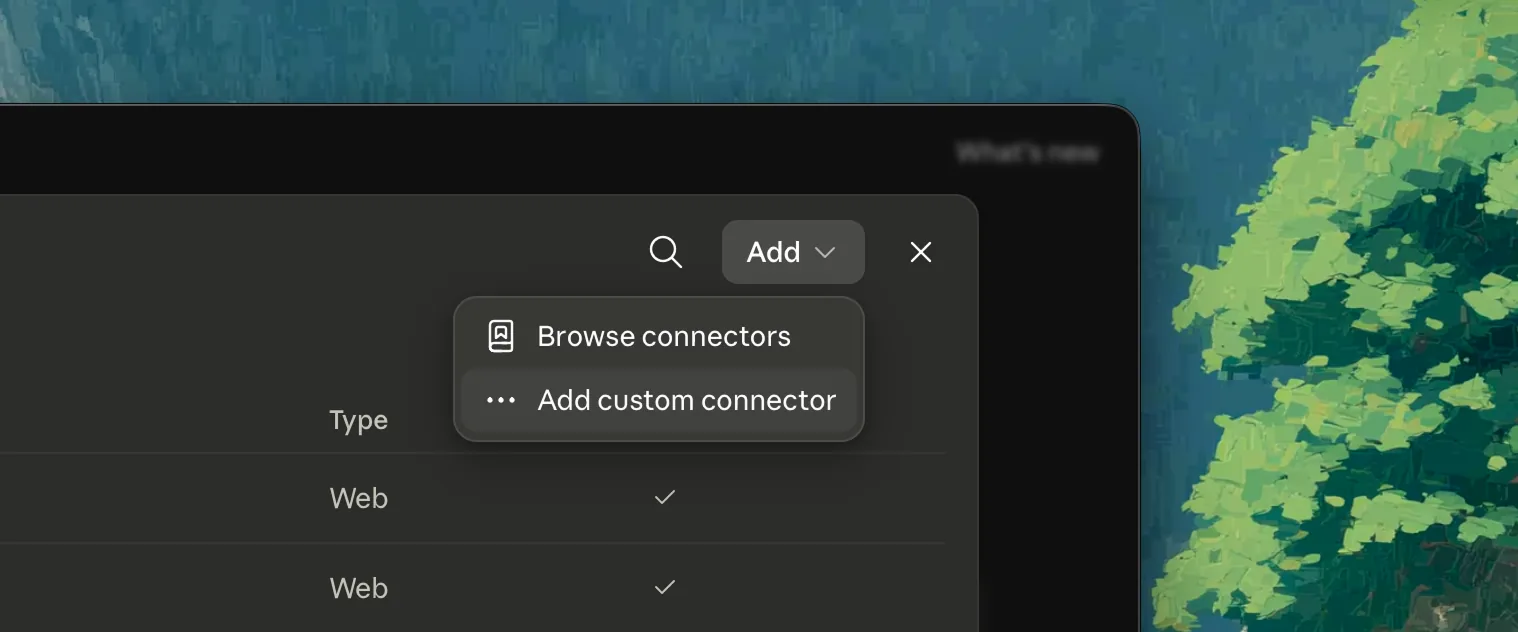
Run it in
Codex in the terminal
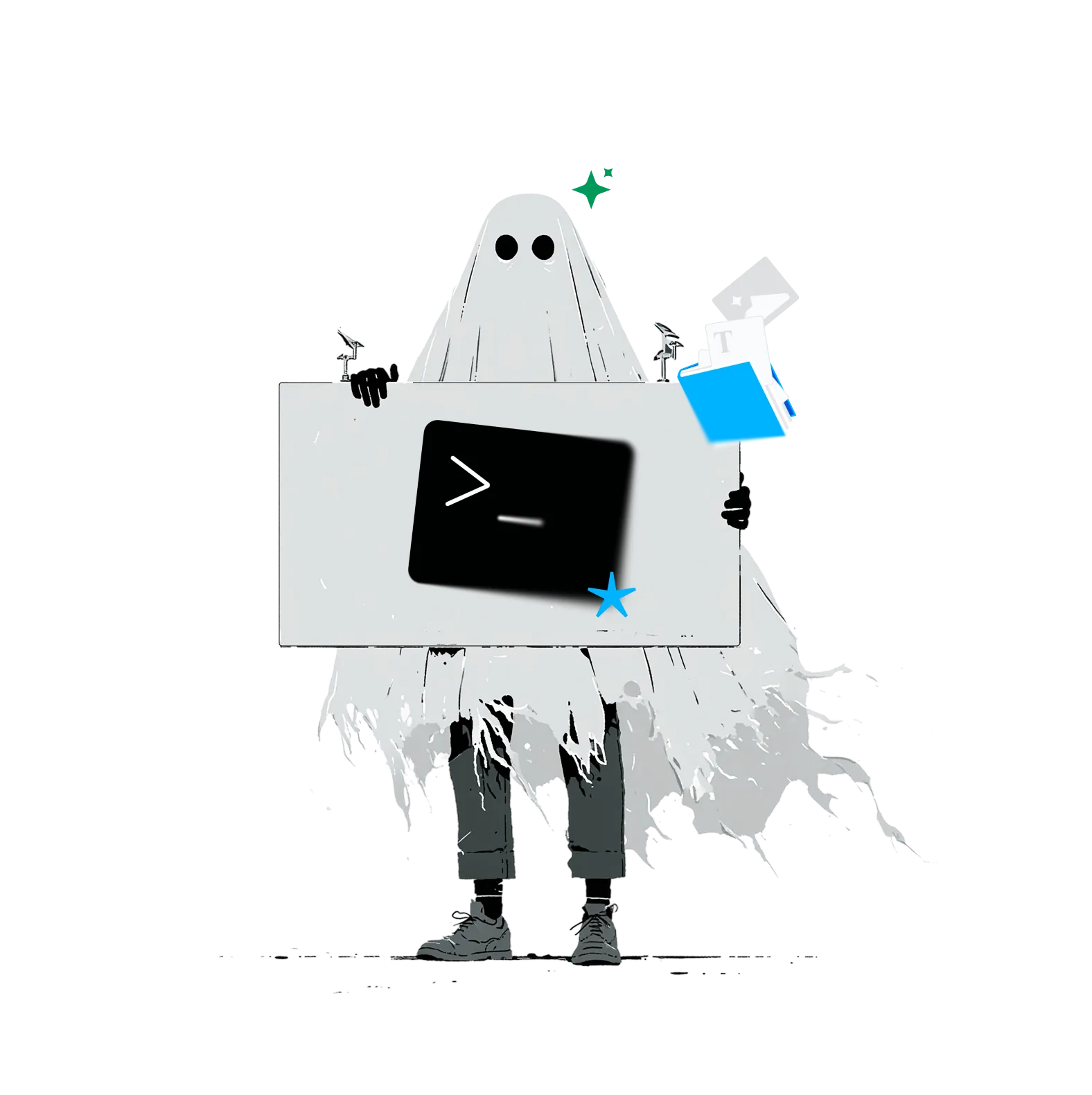
A CLI agent, right inside your workspace.
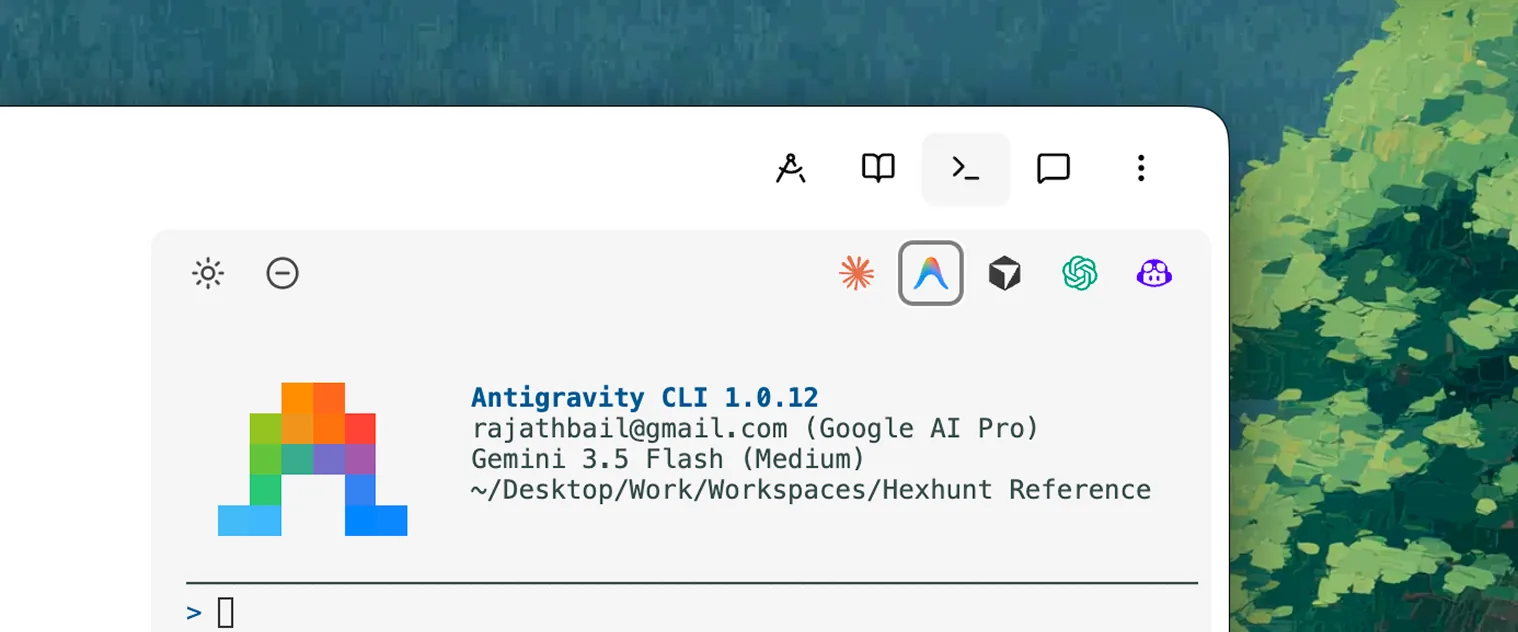
Hillnote has a real terminal docked to your workspace, already in the folder. Turn it on in Settings, then launch the Codex CLI with one click from the terminal toolbar — it operates on the files in front of you.
- 1
Turn the terminal on in Settings → Interface.
- 2
Open the docked terminal — it opens in your workspace folder.
- 3
Click the Codex button in the toolbar — nothing to type.

No setup
Raw markdown files
Your workspace is already just files.
- 1
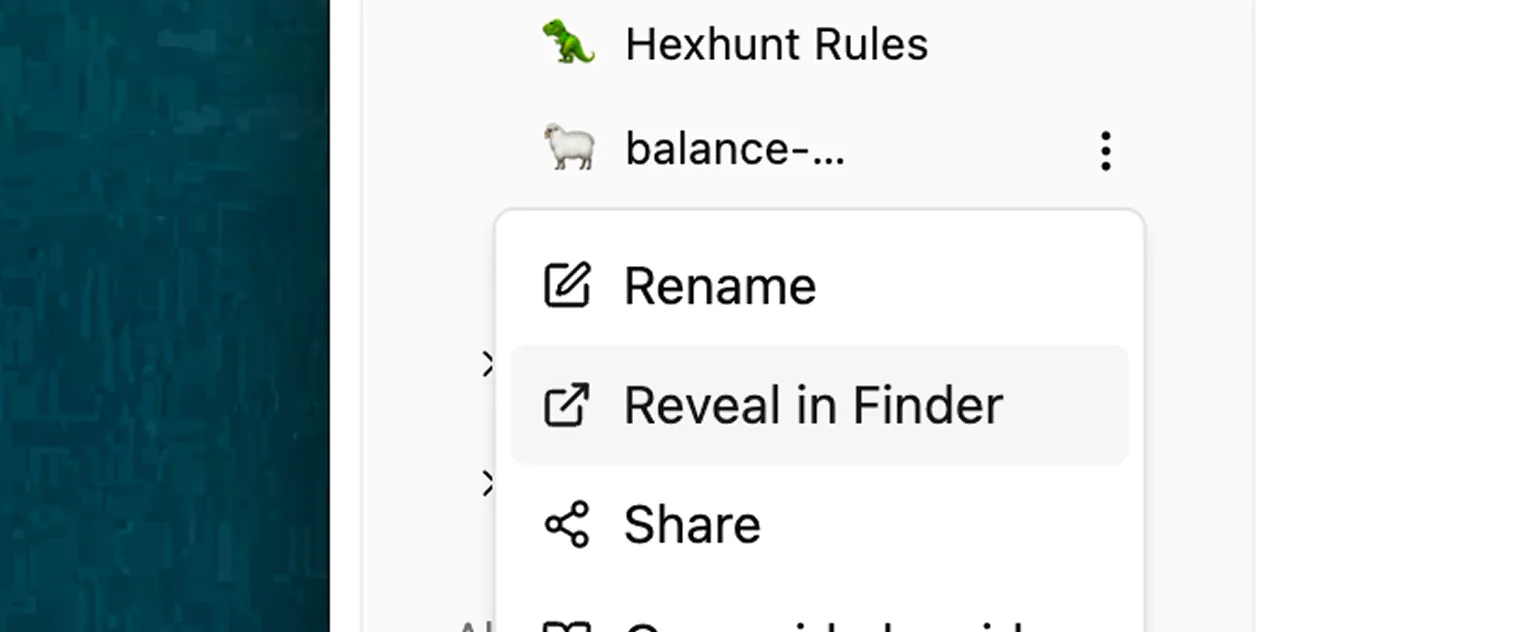
In Hillnote, right-click a workspace or document and choose “Reveal in Finder / Explorer.”
- 2
Point the Codex CLI at the folder as its working directory — or open it in any editor. It's plain markdown, nothing proprietary.
- 3
Codex reads and edits the files directly — no connector, no copy-paste.


Through
A synced drive
Keep the folder where it can already see it.
Keep your workspace in a synced drive ChatGPT can already read, and the documents are in reach without an extra step — it's just files in a folder.




Automate with
Routines on events
Put the AI to work on its own.
Beyond chat: a change in your workspace can fire a ChatGPT routine automatically. There's no REST API to wire up — just events and the OAuth-secured connection.

A workspace event
New doc · comment · status change

ChatGPT runs a routine
Your saved prompt, on the change

Written back
The result lands in the workspace
See ChatGPT in a full setup.
ChatGPT is even better alongside the rest of your stack. Each setup wires Hillnote and the tools that fit a kind of work — all on the same markdown files.
Solo Builder
One person. Every hat. One workspace.
Build this setup
Product
Spec, plan, and track in one place.
Build this setup
Writing
Draft, edit, and publish without leaving your words.
Build this setup
Content Creator
From idea to upload, without the tab circus.
Build this setup
Marketing
Research, plan, and ship campaigns end to end.
Build this setup
Research
Gather, synthesize, and cite what you find.
Build this setupChatGPT questions, answered
Does this work in ChatGPT, or only the Codex CLI?
Both. The remote MCP connector works the same in ChatGPT on the web and in the desktop app — add the custom connector and sign in. The Codex CLI and local server work on files on your own machine.
Do I need to paste an API key?
No. The remote connection authorizes with an OAuth sign-in scoped to your workspaces, and the local methods never leave your machine. There's no key to copy or leak.
Can it edit my files or only read them?
Both. Over MCP and through the Codex CLI, it can create, edit, rename, and reorganize documents directly — or you can connect read-only if you'd rather it just read. You can revoke any connection at any time.
Is there a public API I can call?
Not a separate REST API — MCP is the interface, with about 34 tools for reading and writing your workspace. For automation, save a routine that fires on a workspace event; it runs through the same OAuth-secured connection.
What is the built-in terminal?
A real terminal docked to your workspace, already in the workspace folder. Run the Codex CLI (or any CLI) there and it works on the exact files you're editing — no extra configuration.
What can it actually do once connected?
Search and cite across your notes, draft new documents in your voice, and split, merge, rename, and relink existing ones — about 34 tools spanning documents, search, databases, recipes, canvas, and slides.